
 Tiếng Việt
  한국어
한국어  Русский

Long Son Pagoda
A timeless hilltop treasure
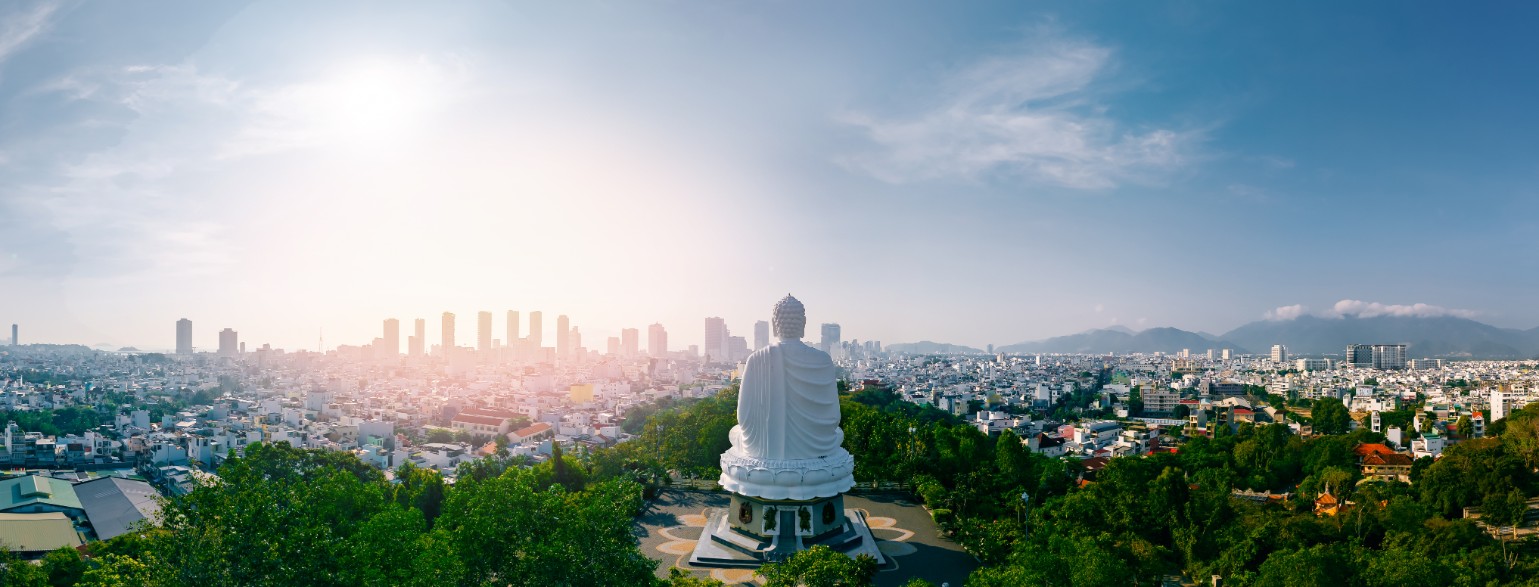
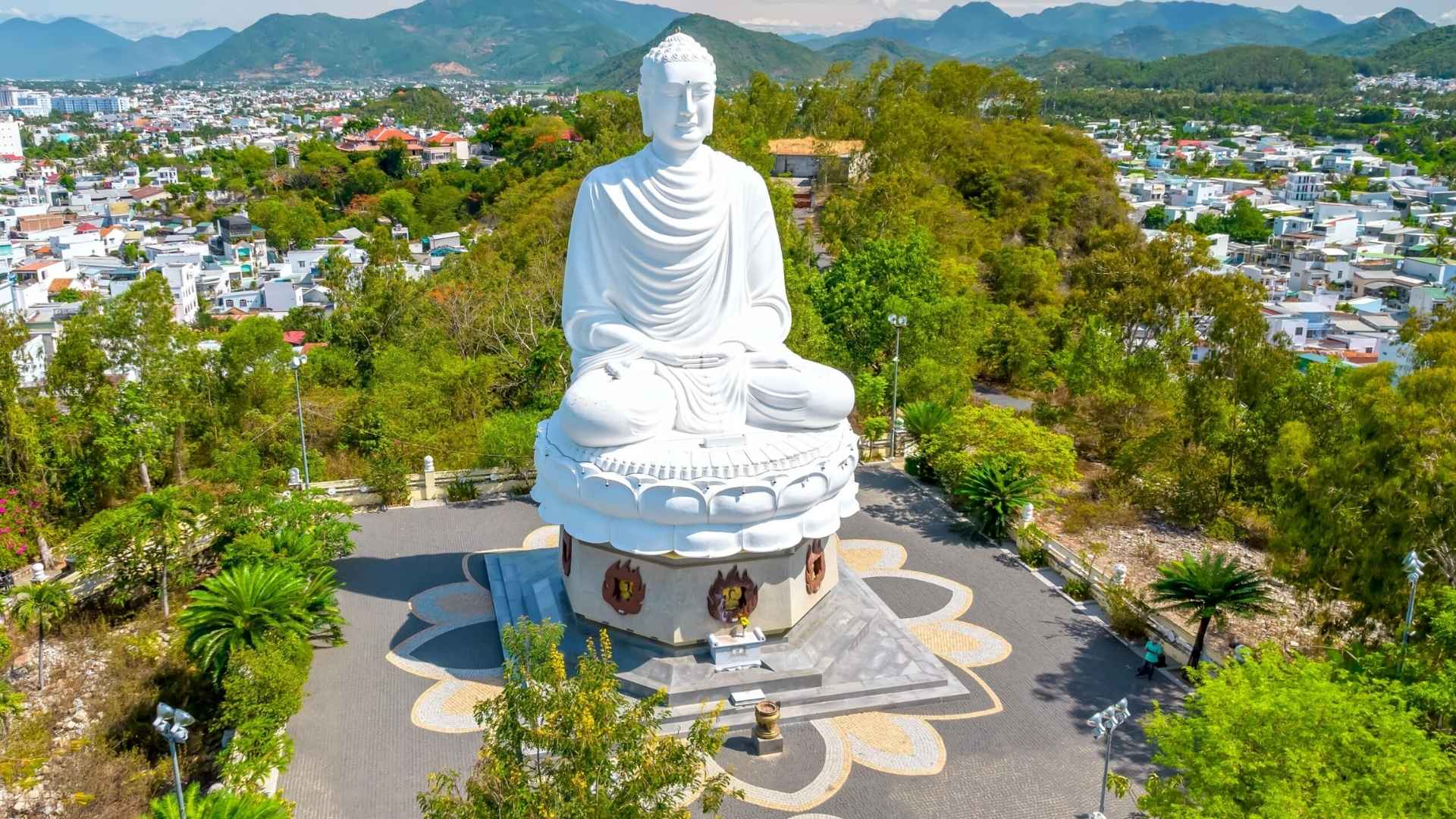
Long Son Pagoda is a historic Buddhist sanctuary at the foot of Trai Thuy Hill, best known for its 24-metre White Buddha and 193-stone-step climb. This guide covers its history, main sights, free entry, etiquette, best visiting times, nearby transport and a half-day cultural route through Nha Trang.
White Buddha Temple Visitor Information At A Glance
| Visitor Detail | Practical Information |
| Address | 22-23 Thang 10 Street, Tay Nha Trang Ward, Nha Trang, Khanh Hoa |
| Setting | At the foot of Trai Thuy Hill |
| Founded | 1886 |
| Former name | Dang Long Pagoda |
| Access | Anytime |
| Admission | Free |
| Route to the summit | 193 stone steps |
| White Buddha | 24 metres high, completed in 1963 |
| Reclining Buddha | At the 44th step, 17 metres long and 5 metres high |
| Suggested visit | Allow approximately 1–2 hours |
| Best time | Early morning or late afternoon |
The temple complex covers more than 3,000 square metres, with several layers of worship spaces, statues, memorial details and hillside viewpoints. Although many visitors focus on the summit, the lower temple and the stop beside the reclining figure are essential parts of the experience, so the visit feels more complete when it is not rushed.
What Is Long Son Pagoda Famous For?
The temple is recognised for Kim Than Phat To, Nha Trang’s 24-metre seated White Buddha overlooking the city from the upper terrace. The route to the summit passes through the main worship area and a large reclining figure, which gives the visit a clear sequence rather than a single photo stop.
Travellers searching for the White Buddha Pagoda in Nha Trang are usually looking for this same complex, which remains an active place of worship. Visitors often describe the upper terrace as calmer than the streets below, while the views across the city and surrounding hills make the climb rewarding. We recommend treating the site first as a religious space and then as a viewpoint, especially around people who are praying.
>>> Planning to explore Long Son Pagoda as part of a wider city itinerary? Use our Nha Trang Travel Guide to connect cultural landmarks with local food, beaches and other experiences around the city.
What Is The History Of Nha Trang’s White Buddha Temple?
Long Son Pagoda was founded in 1886 by the monk Thich Ngo Chi and originally stood higher on the hill under the name Dang Long Pagoda. A major cyclone damaged the first site in 1900, leading to its relocation to the lower position visitors see today.
| Year | Historical Development |
| 1886 | Thich Ngo Chi established the original temple higher on the hill. |
| 1900 | Cyclone damage led to the move to the present site. |
| 1936 | The complex became the headquarters of the Khanh Hoa Buddhist Association. |
| 1963 | The 24-metre White Buddha was completed above the city. |
The timeline explains why the complex contains architecture and memorial elements from different periods. Known in Vietnamese as Chùa Long Sơn, the temple did not emerge as one single construction project, but developed as its religious role expanded and the hillside site changed.
Around the lotus pedestal, Buddhist reliefs commemorate Thich Quang Duc and six other monks connected with the Buddhist crisis of 1963. This is one of the most meaningful parts of the summit, and we suggest taking time to understand the memorial before focusing on the skyline or photographs.
>>> For another perspective on Nha Trang’s religious and cultural heritage, explore Po Nagar Cham Towers, a historic Cham sanctuary where centuries-old architecture and living worship continue side by side.
What To See At Long Son Temple
The visitor route moves from the main worship hall to the reclining Buddha and then up 193 stone steps to the White Buddha at the summit. Most travellers should allow 1–2 hours to explore the complex, complete the climb and pause at each level without rushing.
The Main Hall And Dragon Mosaics
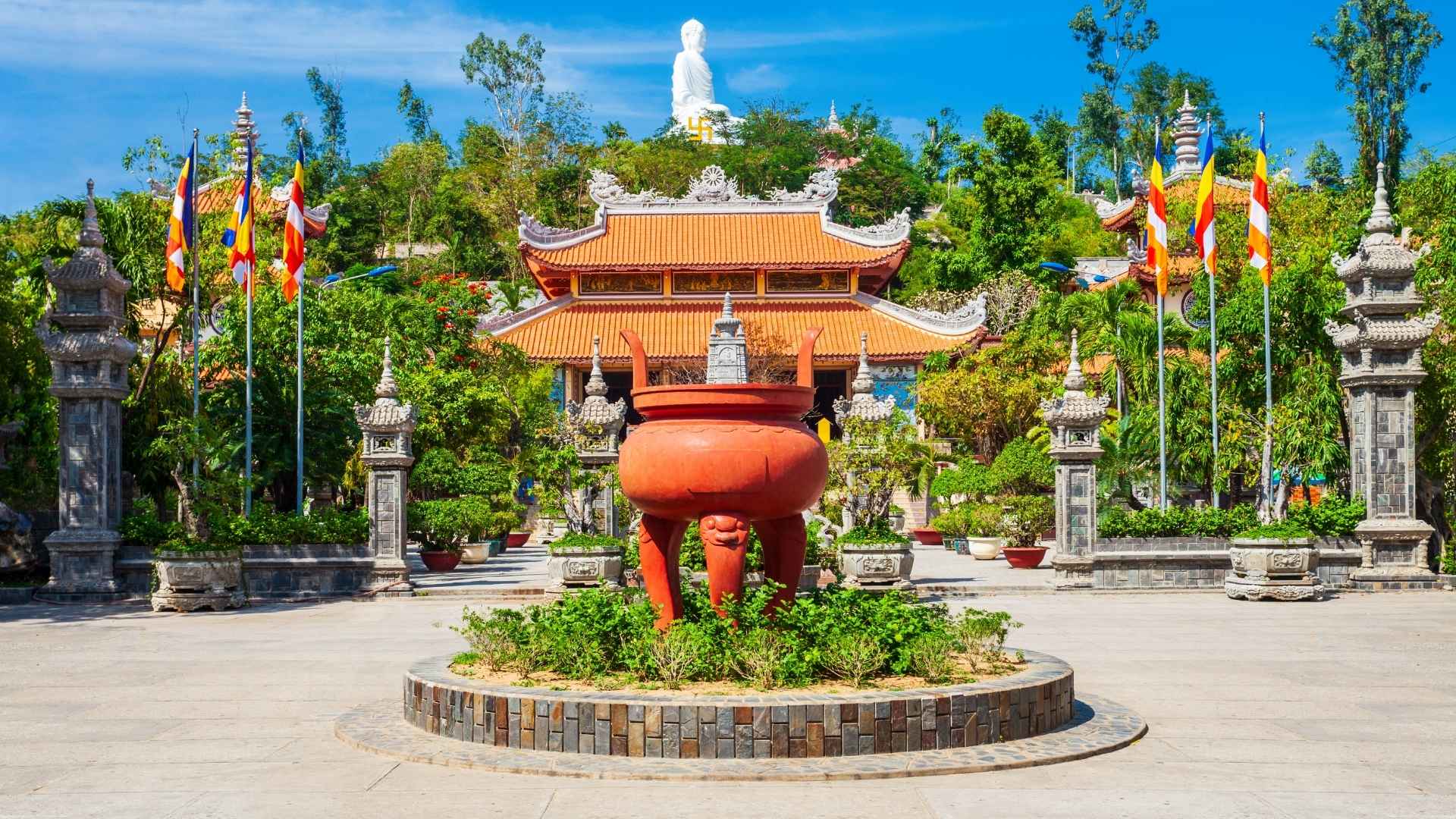
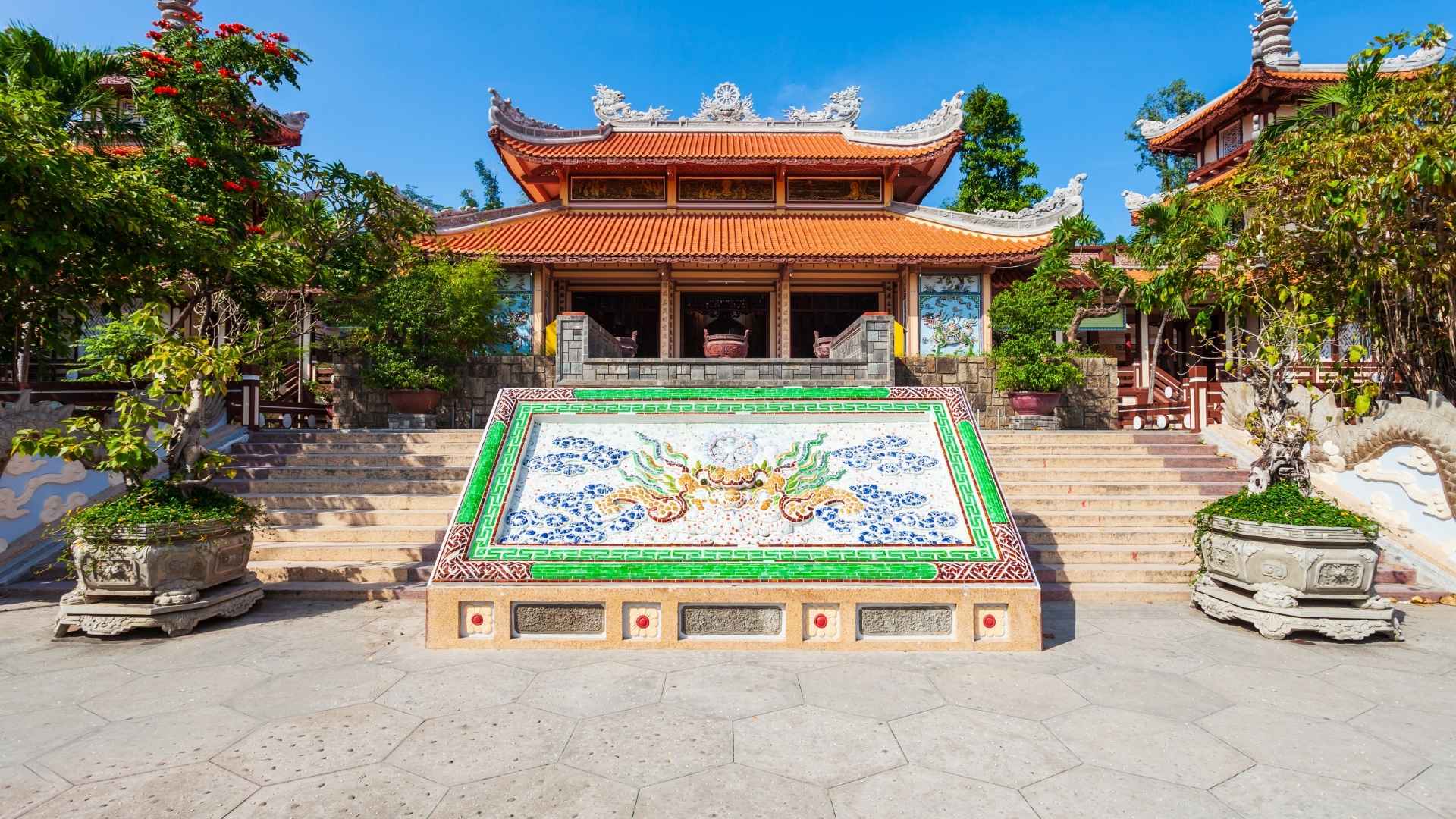
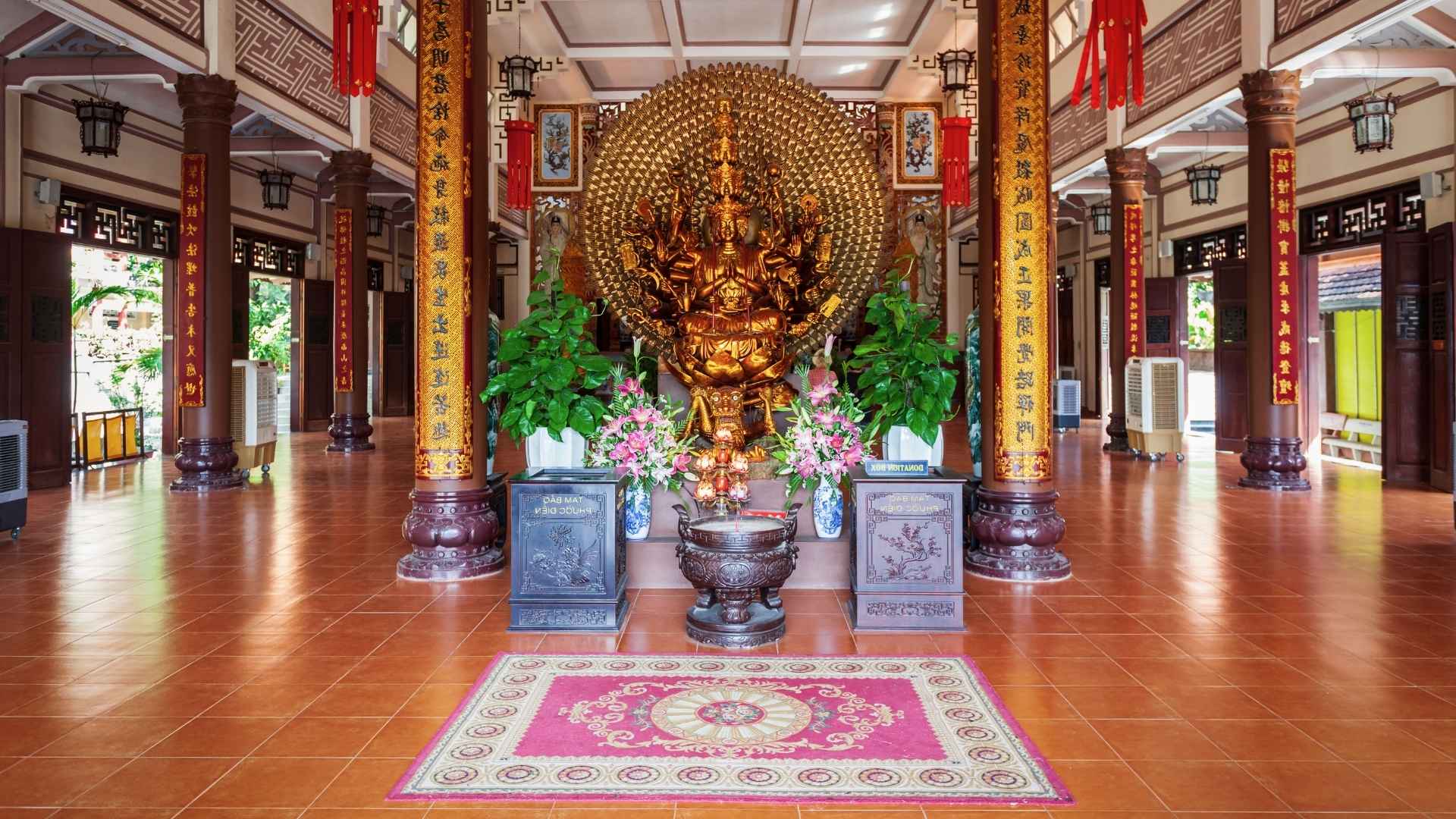
The temple complex extends across more than 3,000 square metres, while the main hall covers more than 1,500 square metres. Inside stands a bronze Buddha statue measuring 1.6 metres and weighing 700 kilograms, while traditional curved rooflines and dragon mosaics made from ceramic and glass decorate the exterior.
This is the working centre of the Long Son Buddhist temple, where monks and local worshippers continue their daily practice. We recommend pausing at the entrance before taking photographs, following any footwear instructions and keeping the route to the altar clear for worshippers.
The Reclining Buddha At The 44th Step
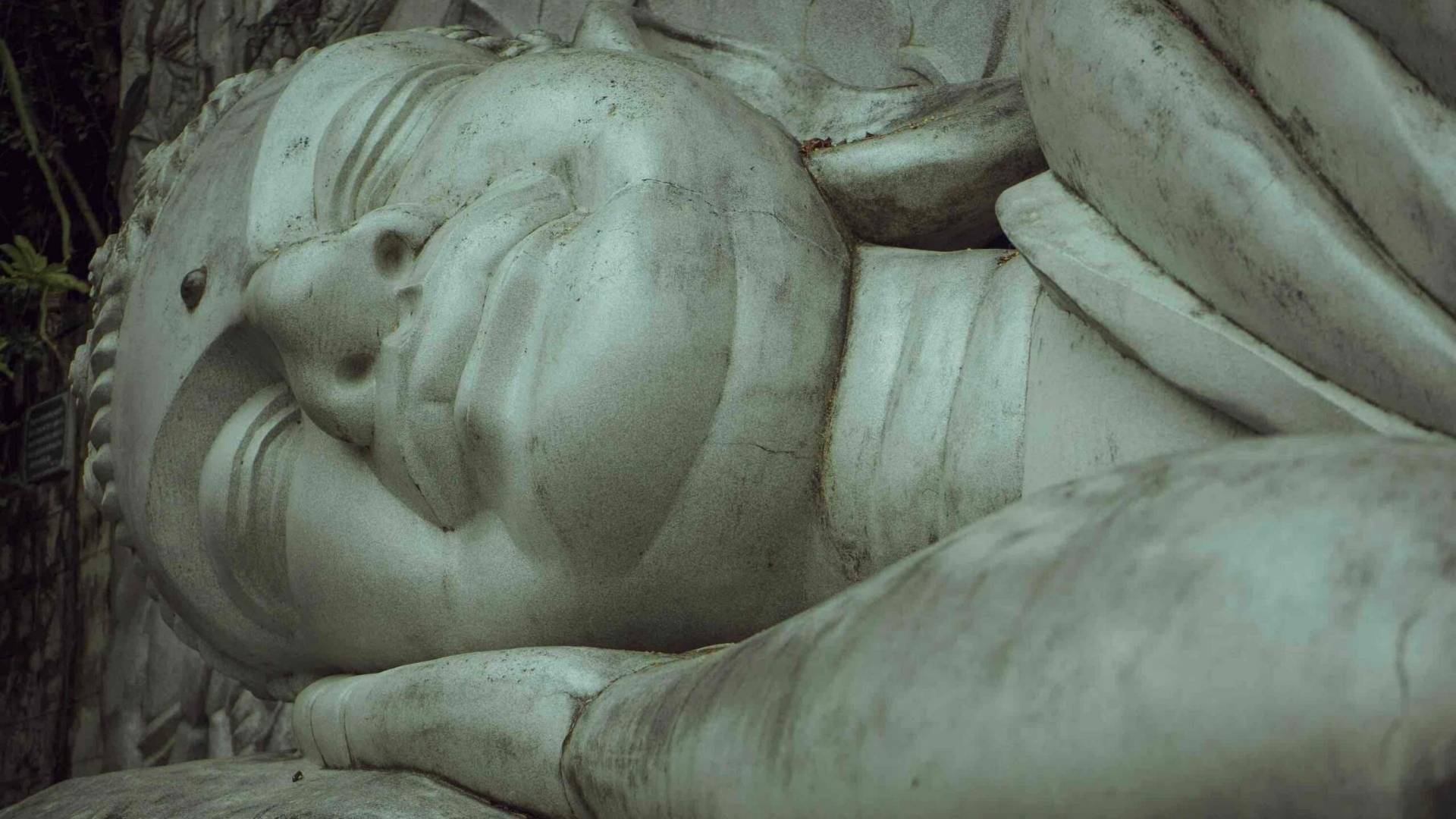
At the 44th step, the reclining Buddha provides the first major stop on the way to the summit. Completed in 2003, the statue measures 17 metres long and 5 metres high, with a relief of 49 disciples arranged behind it to represent the Buddha entering Nirvana.
Many visitors describe the ascent as manageable but noticeably harder in warm or humid conditions. This intermediate level is a practical place to drink water, slow your pace and let children or older family members rest before continuing upwards.
The White Buddha At The Summit
The White Buddha, known locally as Kim Than Phat To, was completed in 1963 and rises 24 metres above its base. From the upper terrace, visitors can look across Nha Trang’s neighbourhoods, railway lines and the surrounding hills.
Reaching the statue requires climbing 193 stone steps. The route is not a technical hike, but limited shade and midday heat can make it more tiring than expected, so we recommend comfortable walking shoes, drinking water and taking short breaks rather than climbing quickly.
The upper terrace remains part of a sacred setting as well as a city viewpoint. Keep a respectful distance from people praying, avoid sitting on the memorial base and leave clear space around the Buddhist reliefs when taking photographs.
Travellers moving directly through the complex may complete the visit in around one hour, but allowing closer to two hours creates more time for the main hall, reclining figure, summit view and memorial details. The staircase is not fully step-free, so visitors with limited mobility should ask locally whether alternative access is available on the day.
Essential Information You Should Know About Long Son Pagoda
Before visiting Long Son Pagoda, it helps to understand the practical details that shape the experience, from free admission and access times to the best visiting hours and appropriate dress. These simple considerations make the climb more comfortable and help visitors explore the active Buddhist site with greater respect.
What Are The Entrance Fee And Visiting Hours?
Long Son Pagoda offers free admission and can be accessed at any time. No entrance ticket is required, although access to individual worship spaces may vary during ceremonies or periods of religious activity.
Donations are voluntary and should be placed in clearly marked donation boxes. Some visitors have reported unsolicited offers involving incense, guiding services or requests for money, so we recommend declining politely when unsure and asking temple staff for assistance rather than assuming payment is required.
What Is The Best Time To Visit?
Early morning is usually the most comfortable time to visit, with cooler air, fewer tour groups and a quieter atmosphere around the worship areas. Late afternoon is another suitable option, when the light becomes softer and temperatures begin to fall.
The middle of the day can make the 193-step climb more demanding, particularly during hot or humid weather. Rain may also make the stone staircase slippery, so we suggest postponing the upper climb during a heavy shower and allowing enough daylight for the return journey.
What Is The Dress Code And Temple Etiquette?
Visitors should wear modest clothing that covers the shoulders and knees, even when arriving directly from the beach. Remove shoes where requested, take off hats inside enclosed worship spaces and keep conversations low around people who are praying.
Do not touch or climb statues, sit on religious structures or handle ritual objects without permission. Ask before photographing monks or ceremonies, avoid using flash near worshippers and allow religious activities to take priority over sightseeing.
>>> Weather can make a noticeable difference to the 193-step climb, especially around midday or during rain. Check our Nha Trang Weather guide when choosing the most comfortable day and time for your visit.
How To Get There From Nearby Nha Trang Landmarks
The temple is located at 22, 23 Thang 10 Street, around 400 metres west of Nha Trang Railway Station. Taxi, Grab and private car are the easiest choices from most parts of the city, while walking is practical from the station or cathedral when the weather is mild.
| Starting Point | Approximate Distance | Recommended Route |
| Nha Trang Railway Station | 0.4 km | Walk west towards 23 Thang 10 Street. |
| Nha Trang Cathedral | 1.3 km | Walk in cooler weather or take a short taxi or Grab ride. |
| Dam Market | 1.7 km | Taxi or Grab is more comfortable during midday heat. |
| Po Nagar Cham Towers | 4.7 km | Use a taxi, Grab or private car between the two heritage sites. |
Share the full street address with your driver because similarly named temples can cause confusion. Traffic near central junctions varies through the day, so allow extra time when travelling during commuter periods or after rain.
>>> If Long Son Pagoda is one stop within a longer journey, our How to Get to Nha Trang guide covers the main air, rail and road options for reaching the city.
How To Plan A Half-Day Cultural Route In Nha Trang
| Suggested Time | Stop | What To Do |
| 07:30–09:00 | Long Son Pagoda | Begin while the air is cooler. Visit the main hall, pause at the reclining Buddha and complete the 193-step climb to the White Buddha before the midday heat builds. |
| 09:15–10:00 | Nha Trang Cathedral | Travel approximately 1.3 kilometres to the cathedral. Take time to observe its stone architecture and understand another part of Nha Trang’s religious heritage. |
| 10:15–11:15 | Dam Market | Continue to the market to explore local produce, regional snacks and everyday trading life. Keep valuables secure and ask for prices before purchasing. |
| 11:30–12:30 | Po Nagar Cham Towers | Finish at the Cham tower complex, approximately 4.7 kilometres from the pagoda. Explore its architecture, cultural history and continuing role as a place of worship before stopping for lunch. |
This route works because each stop presents a different part of Nha Trang’s local identity. Do not treat the religious sites as interchangeable photo locations, and check worship schedules, clothing expectations and weather conditions before committing to every stop.
>>> After a morning among temples, churches and local markets, continue towards Nha Trang Beach for a slower afternoon along the city’s central shoreline.
Where To Stay For Nha Trang’s Beach And Cultural Landmarks
A beachfront base on Tran Phu Street makes it easier to combine cultural visits with dining, wellness and time by the sea. After a morning in the city’s older religious quarter, returning to the coast creates a natural change of pace without moving far from central Nha Trang.
Mercure Nha Trang Beach is approximately a 12-minute drive from Long Son Pagoda and offers 108 city-view and sea-view rooms at 88A Tran Phu Street. Our locally inspired design draws on Nha Trang fishing-village culture and Champa craft, while Tathik Restaurant, Horizon Spa, the swimming pools and 24-hour gym support a comfortable return after a day of sightseeing.
- Stay Longer, Save More: Stay for at least three nights and book at least three days in advance to receive up to 30% off, with an additional 5% saving for ALL members. The package suits travellers who want more time for cultural landmarks, beach days and local dining without compressing everything into one itinerary.
- Stay & Shine: Enjoy a two-night stay with daily buffet breakfast, a 60-minute revitalising hair-wash treatment for two, plus priority early check-in and late check-out subject to availability. Stay dates are available until 28 August 2026.
Book your stay at Mercure Nha Trang Beach and discover Nha Trang through its sea breeze, local craft and cultural stories, all from one thoughtfully connected coastal address.
Frequently Asked Questions About The White Buddha Temple
What Is The Temple Best Known For?
It is best known for the 24-metre seated White Buddha, the 193-step climb, the reclining figure at the 44th step and the panoramic views of Nha Trang. Its ongoing role as a religious centre gives the visit meaning beyond the viewpoint.
Is Entry Free?
Yes. There is no official entrance fee, and donations are optional.
Is The Climb Difficult?
The route is manageable for many visitors, but the heat and humidity can make it tiring. Take water, wear stable footwear and pause at the reclining figure before continuing.
What Should Visitors Wear?
Choose modest clothing that covers the shoulders and knees. Remove shoes and hats where signs or local custom require it.
Can The Temple Be Visited At Any Time?
Yes, access is available anytime. Early morning and late afternoon remain the most comfortable periods for the climb and photography.
Can It Be Combined With Po Nagar Cham Towers?
Yes. The two sites are approximately 4.7 kilometres apart and fit naturally into a half-day cultural itinerary with the cathedral or market.