
 Tiếng Việt
  한국어
한국어  Русский

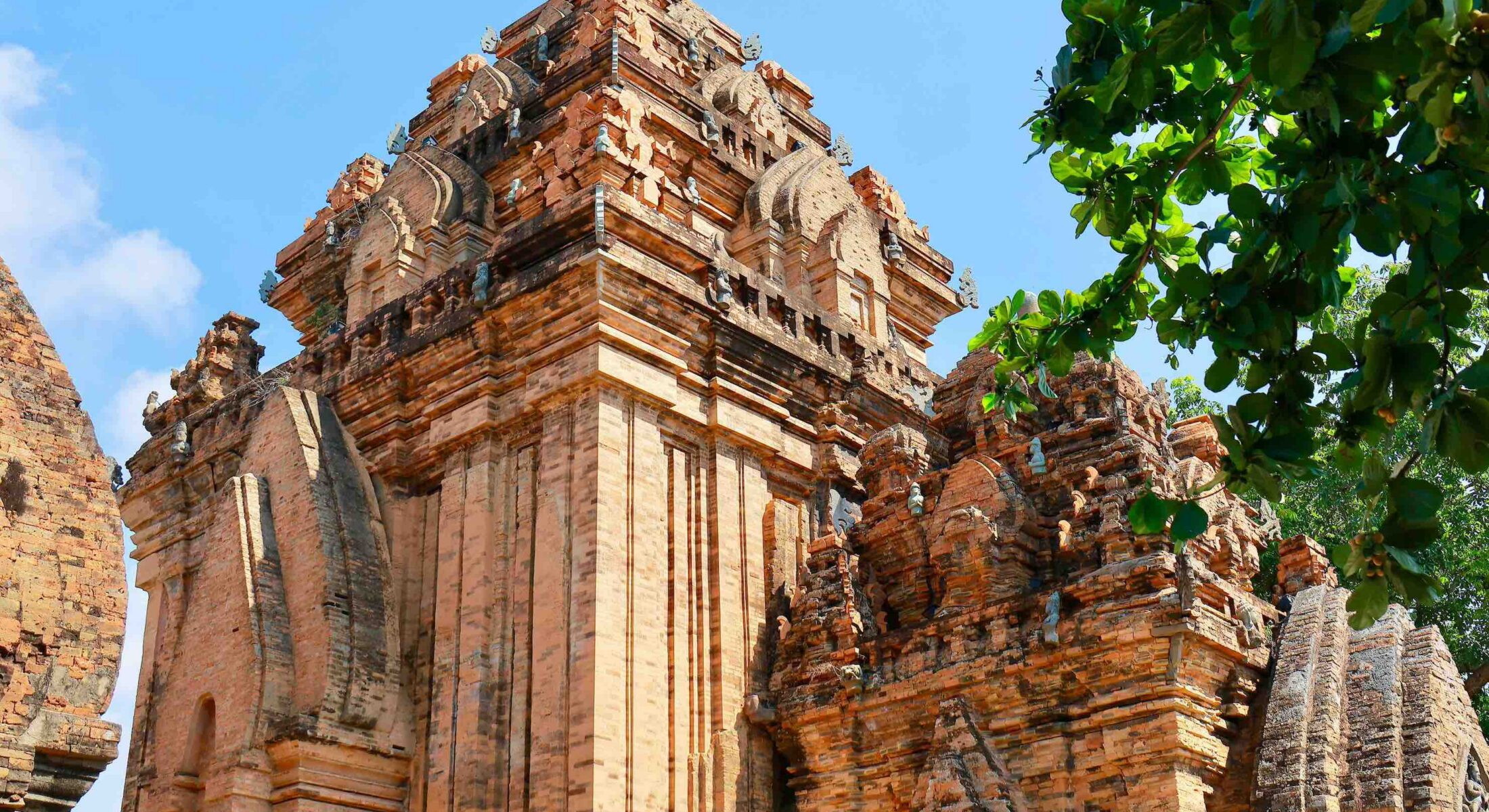
Po Nagar Cham Towers
An Ancient Cham Legacy in Nha Trang
Po Nagar Cham Towers is a living Cham temple complex on Cu Lao Hill, about 2 kilometres north of central Nha Trang, where four surviving brick towers preserve centuries of architecture and worship. This guide covers its history, sacred structures, opening information, dress code, travel options and a visiting route.
Po Nagar at a Glance
| Visitor Detail | Specific Information |
| Address | 61 Hai Thang Tu Street, Bac Nha Trang Ward, Nha Trang, Khanh Hoa |
| Best time | January to August (Dry Season) |
| Setting | A 10-metre hill beside the river |
| Main construction period | Eighth to thirteenth centuries |
| Towers remaining | Four |
| Tallest structure | 23 metres |
| Heritage status | Special National Relic, recognised on 17 January 2025 |
| Suggested visit | 60–90 minutes, or up to two hours at a slower pace |
| Main festival | 20th–23rd days of lunar month three |
| Dress requirement | Cover shoulders and knees inside sacred areas |
What Are Po Nagar Cham Towers?
Po Nagar Cham Towers is the name used for a group of Cham sanctuaries rather than one isolated building. The complex occupies a raised site above the water, combining archaeological remains, four standing towers and a living sanctuary used by Cham and Vietnamese devotees.
Ponagar Temple Nha Trang, Po Nagar Cham Temple and Cham Towers Nha Trang all refer to the same cultural landmark. Other written variants include Po Nagar Tower, Po Nagar Cham Tower, Ponagar Cham Towers and Thap Ba Po Nagar, while “Po Nagar” identifies the revered goddess associated with the site.
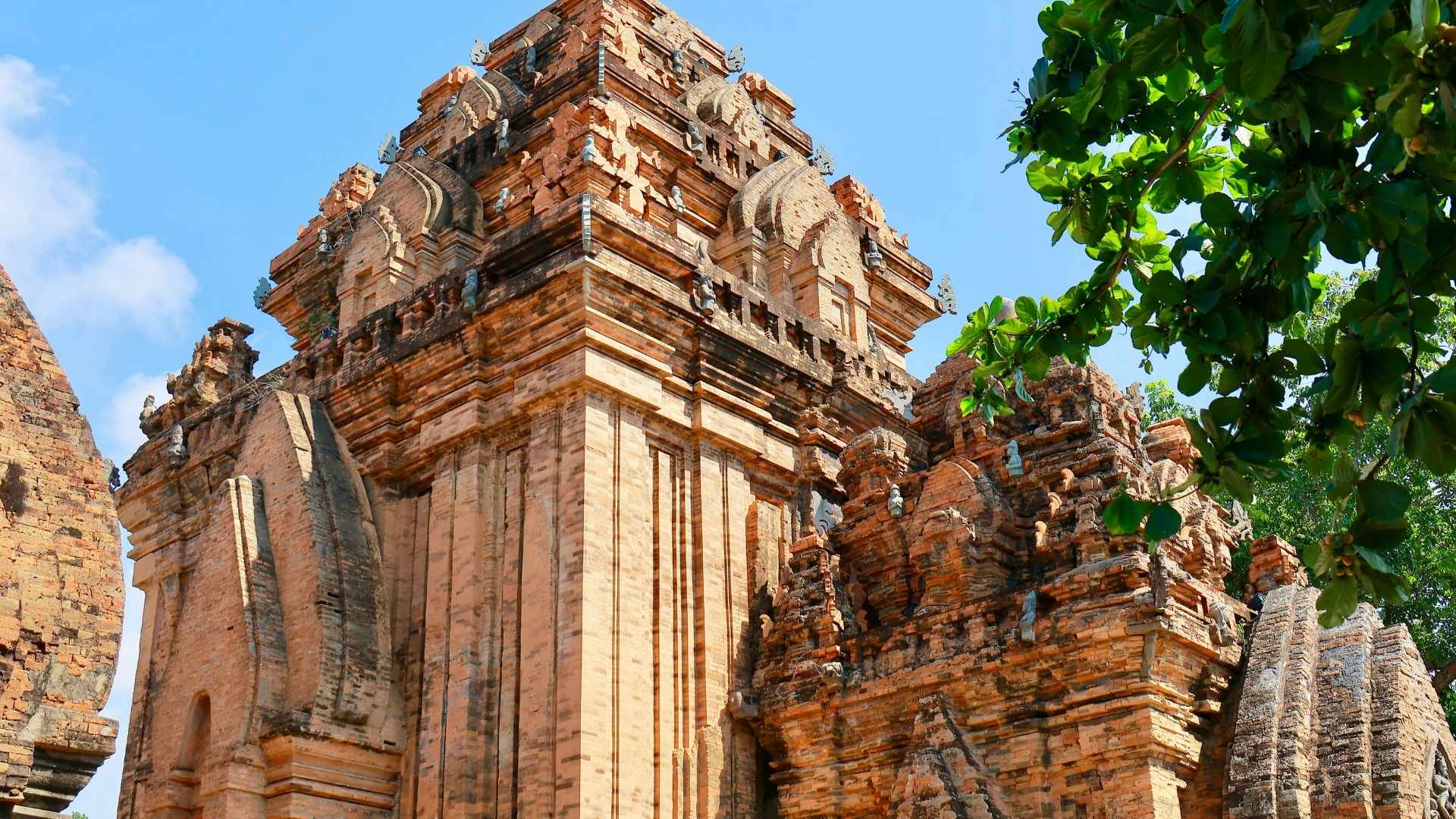
>>> Planning to place Po Nagar within a wider city itinerary? Explore our Nha Trang Travel Guide for beaches, cultural landmarks, local food and practical travel ideas.
The History and Religious Significance of Po Nagar
The sanctuary developed within Kauthara, a principality of the Champa Kingdom centred around present-day Khanh Hoa. Its surviving structures were created and renewed across several centuries, which explains why the complex contains different architectural phases rather than one single construction date.
From Ancient Champa to Modern Nha Trang
The site preserves evidence of the Cham civilisation from approximately the eighth to thirteenth centuries. It became a National Historical and Cultural Relic in 1979, while the associated celebration entered Vietnam’s list of national intangible cultural heritage in 2012.
In 2025, the complex received the country’s highest heritage classification, recognising its architecture, ancient inscriptions and continuing Cham spiritual traditions. This update deserves prominence because many older travel guides still mention only the 1979 recognition.
Who Was the Mother Goddess?
Po Ina Nagar, also written as Yan Po Nagar, is honoured as the Mother of the Land in Cham belief. Local traditions connect her with the creation of the homeland, agricultural knowledge, weaving and the protection of community life.
The sanctuary also reflects Hindu worship and contact with wider South Asian religious traditions. Images or references connected with Shiva, Bhagavati, Durga and Ganesha help explain this cultural exchange, but the goddess retains her own place within Cham belief rather than functioning as a simple substitute for another deity.
From the Cham Goddess to Thien Y A Na
Vietnamese communities later embraced the goddess under the name Thien Y A Na. This continuity transformed the sanctuary into a shared spiritual space where Cham pilgrimage, Vietnamese folk belief and local ritual practice meet.
>>> To continue exploring Nha Trang’s religious heritage, visit Long Son Pagoda, another important spiritual landmark in the city.
Po Nagar Cham Architecture: What to Look For
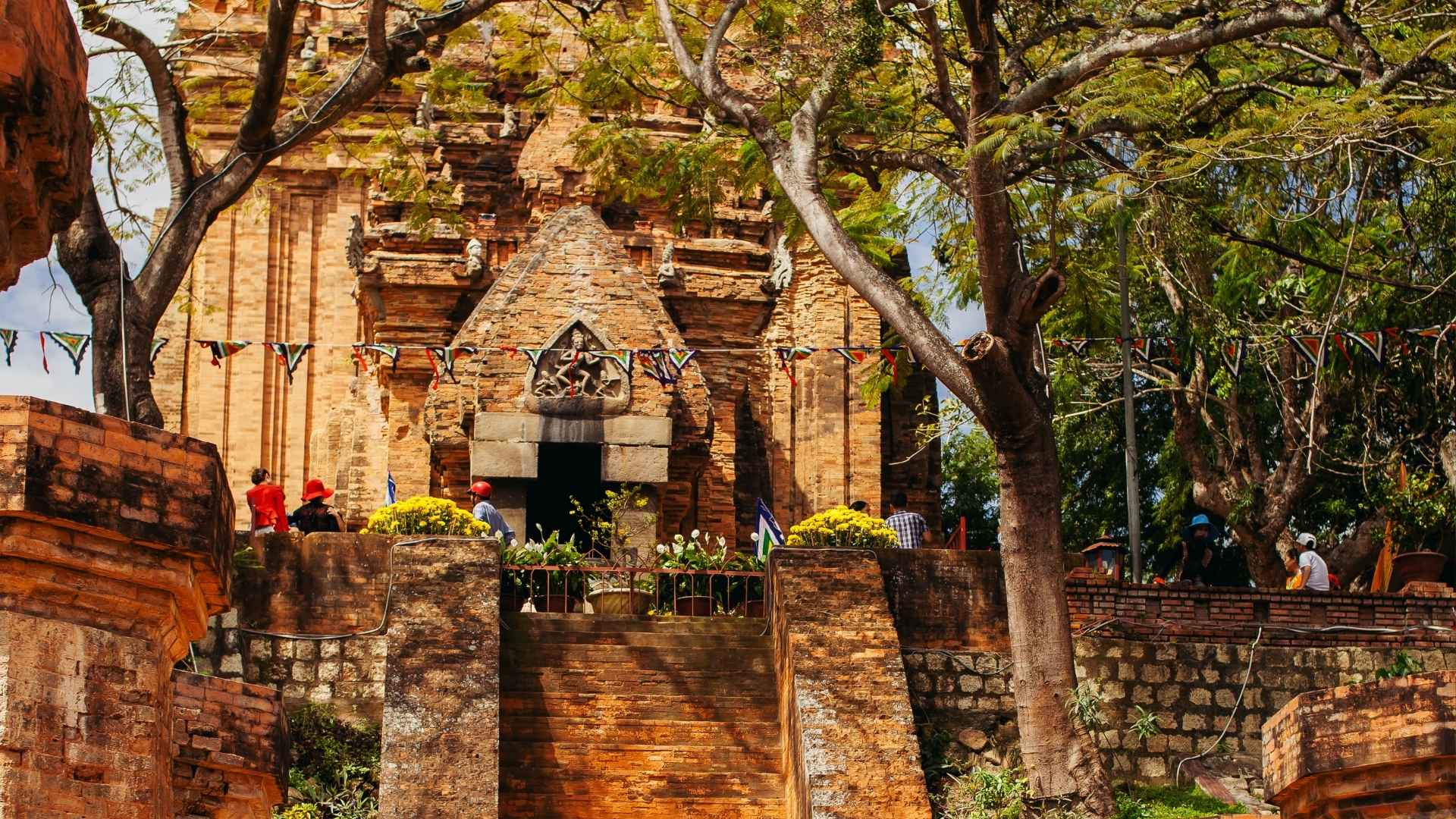
Cham brick architecture becomes easier to understand when you follow the site from its lower foundations to the upper sanctuaries. Each level served a different purpose, creating a three-level temple layout that moved pilgrims from arrival and preparation towards prayer.
The Three Architectural Levels
The lowest level once contained the Gate Tower, although only foundations and traces remain. The middle terrace holds the ceremonial hall, while the upper precinct contains the surviving Kalan towers and principal worship spaces.
This progression was both physical and ceremonial. Pilgrims moved uphill in stages, so the route still shows how architecture organised religious practice.
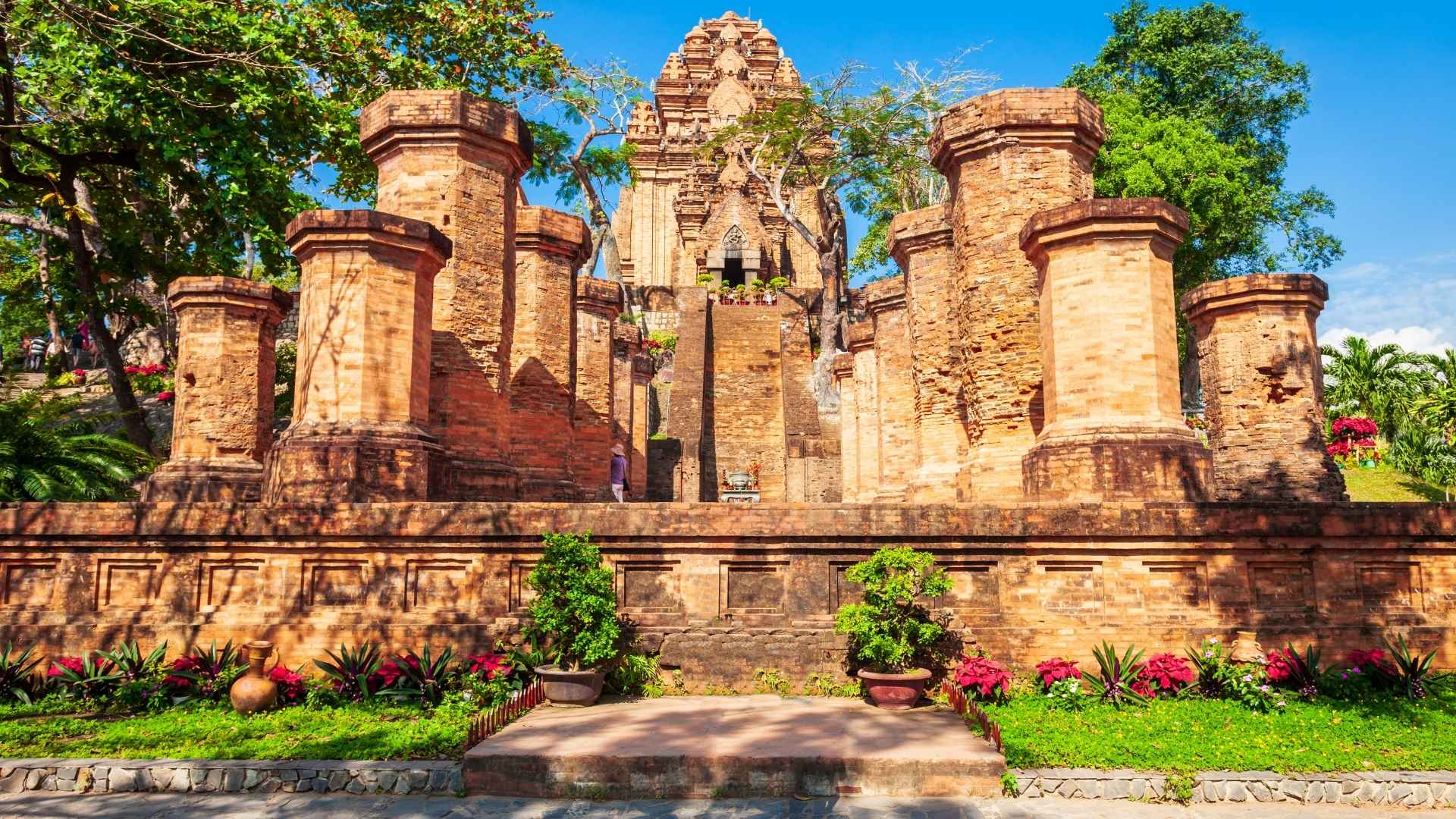
The Ceremonial Hall and Its Brick Pillars
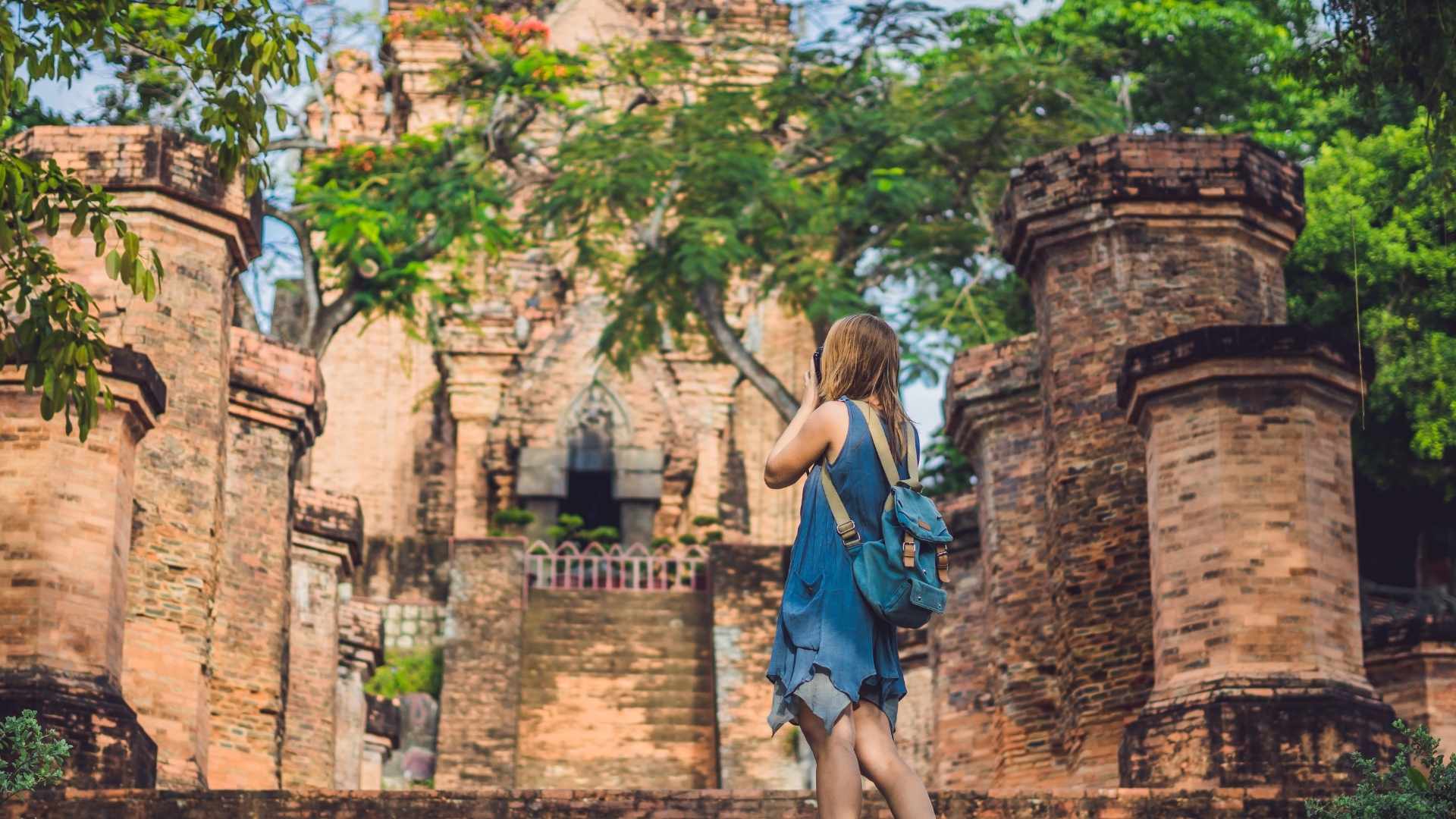
The Mandapa contains ten large octagonal brick pillars surrounded by twelve smaller pillars. The hall provided a place to prepare offerings and complete rituals before entering the upper sanctuary.
Pause here rather than treating it only as a passageway. Its repeated columns create one of the clearest views of the site’s scale and help frame the towers above.
The 23-Metre Main Sanctuary
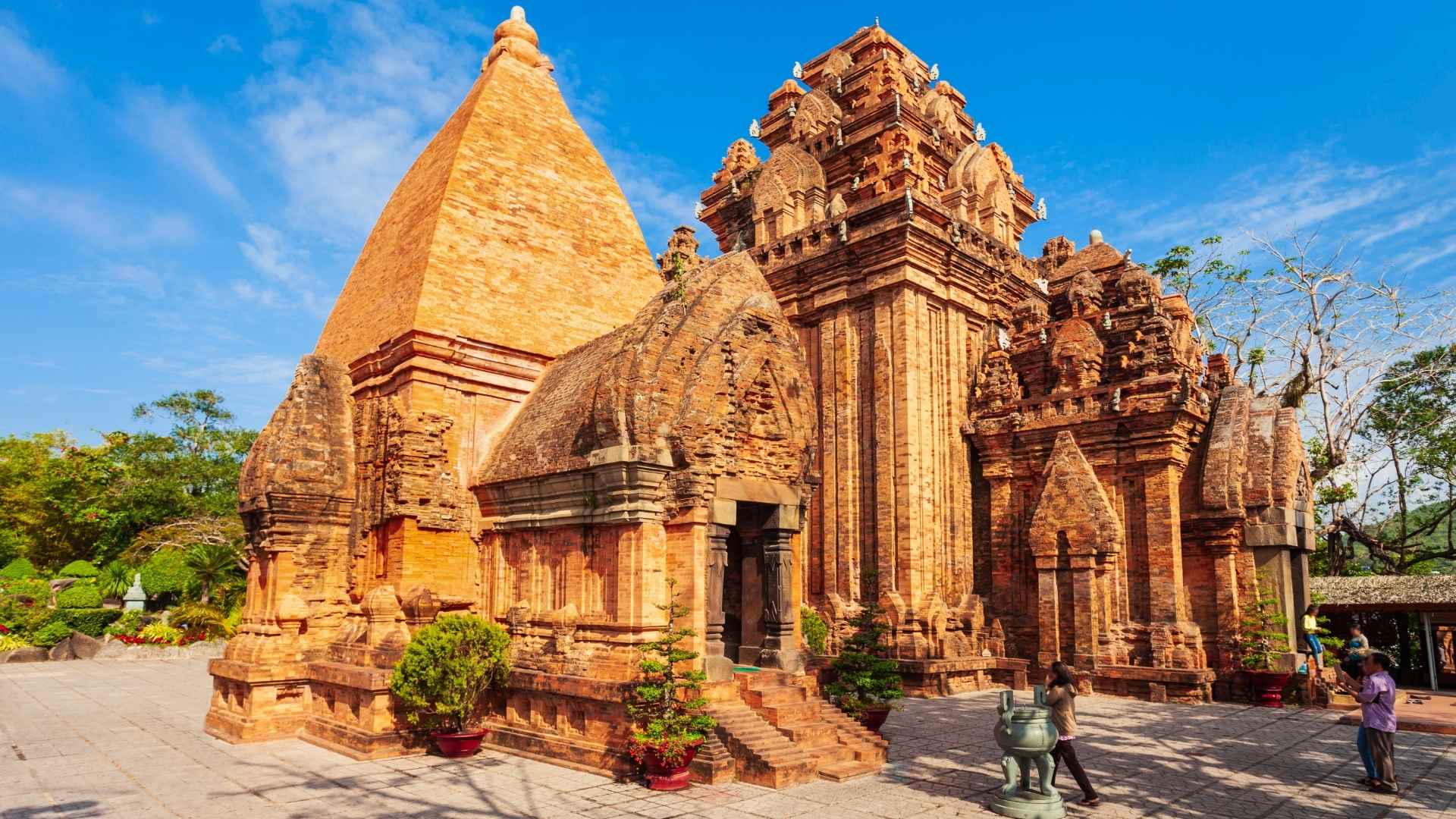
The North Tower is the tallest surviving structure at approximately 23 metres and is commonly dated to AD 813–817, with later repairs. Inside, a black granite statue of the goddess measures about 2.6 metres and remains a focus of devotion.
Because worship continues here, approach the interior quietly. Stand aside for devotees, follow any footwear instructions and avoid blocking the entrance while taking photographs.
Brickwork, Reliefs and Sacred Imagery
The builders used red-fired bricks with closely fitted joints, then added terracotta reliefs, sandstone carvings and religious figures around entrances and rooflines. The stone stelae record rulers, donations, worship and restoration, giving the complex value beyond its visual form.
Claims about a completely “mysterious” bonding method should be treated carefully because the surviving masonry reflects several techniques and restoration periods. A more useful observation is the precision of the joints and the way the brick surfaces support carved decorative programmes.
Festival and Living Cham Traditions
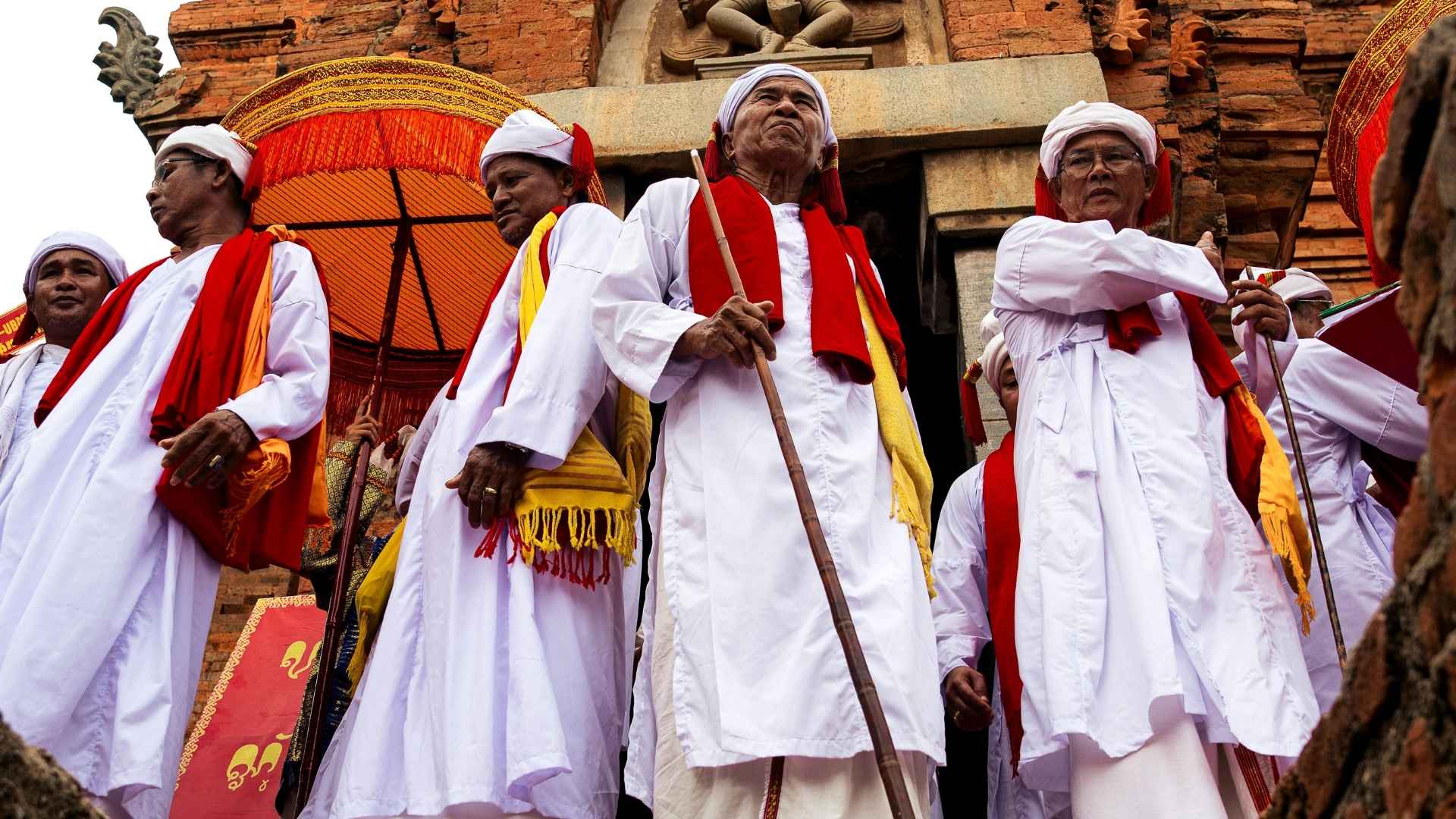
The Po Nagar Festival takes place annually from the 20th to the 23rd day of the third lunar month, so its Gregorian dates change each year. Ceremonies may include processions, offerings, prayer, music and traditional Cham dance, drawing both worshippers and cultural visitors.
This is the most meaningful period for observing living heritage, but it is not the quietest time to visit. Attend with patience, give religious participants priority and avoid treating ceremonies as staged entertainment.
Essential Information To Plan Your Visit To Po Nagar Cham Towers
Searches for Po Nagar opening hours, Po Nagar entrance fee and Po Nagar dress code often return different answers. Check the latest operating information, allow enough time for the uphill route and dress for both the tropical climate and a sacred setting.
Opening Hours, Entrance Fee and Visit Duration
Po Nagar is open daily from 06:00 to 17:30. The entrance fee is approximately VND 25,000–30,000 per person, although prices may change, so check the latest information before visiting.
Allow 60–90 minutes for the main route, or plan a one-to-two-hour visit when you want to read displays, watch a performance or spend time at the viewpoint. Travellers on Tripadvisor commonly describe the complex as manageable within a short Nha Trang sightseeing day.
Dress Code and Temple Etiquette
Cover your shoulders and knees before entering the towers, and bring a light shawl when your daytime clothing is less modest. Speak quietly, do not touch statues or offerings, follow signs about shoes and photography, and ask before photographing people during prayer.
The site remains a functioning sanctuary rather than a museum-only attraction. Give worshippers space and wait for ceremonies to finish before approaching altars or narrow doorways.
Best Time to Visit Po Nagar Cham Towers
Nha Trang enjoys a tropical savanna climate, making it a pleasant destination for most of the year. However, to experience the Po Nagar Cham Towers in Nha Trang, Vietnam, in the most comfortable conditions, timing is key.
The dry season, running from January to August, is generally the best time to visit. The skies are clear, and the gentle sea breeze makes exploring the outdoor complex delightful. For those who prefer milder temperatures, the months of February through April are ideal.
If you wish to witness the site at its most vibrant, consider visiting during the annual Thap Ba Festival, typically held in late April or early May. During this time, the Cham people gather to honour the goddess with traditional dances, prayers, and offerings. It is a spectacular display of living culture that adds a deep layer of meaning to the architectural splendour.
>>> Before choosing your visit date, check our Nha Trang Weather guide for seasonal conditions and practical planning information.
How to Get to Po Nagar
The listed address sits on the northern side of the river. A taxi, ride-hailing car or motorbike is usually the simplest choice, and traveller reviews repeatedly describe access from central Nha Trang as straightforward.
From the beachfront centre, the route generally follows Tran Phu Street and crosses Tran Phu Bridge. Public transport routes and traffic conditions change, so check a live map before departure rather than relying on a fixed bus number.
>>> If Po Nagar is part of a wider trip to the city, our How to Get to Nha Trang guide covers the main options for reaching the destination by air, rail and road.
| Starting Point | Approximate Distance | Practical Route |
| Central Nha Trang | About 2 km | Taxi, ride-hailing car or motorbike across Tran Phu Bridge |
| Hon Chong Promontory | About 2.1 km | A short drive south-west along the northern coastal area |
| Thap Ba Hot Spring Centre | About 1.5 km | A short taxi or motorbike journey, suitable for the same half-day plan |
| Long Son Pagoda | About 4.7 km | Use a taxi, Grab or private car between the two heritage sites. |
From the review patterns we examined, visitors value the easy access but often underestimate how busy the upper terrace becomes. Our practical approach is to travel directly, arrive early and combine no more than one nearby attraction before lunch.
A Suggested 60–90-Minute Po Nagar Visit Itinerary
Begin at the lower entrance, where you can check the latest visitor information and examine the foundations of the former gateway. Spend around 10 minutes here before continuing uphill to the Mandapa, the ceremonial hall marked by ten large octagonal pillars and twelve smaller columns.
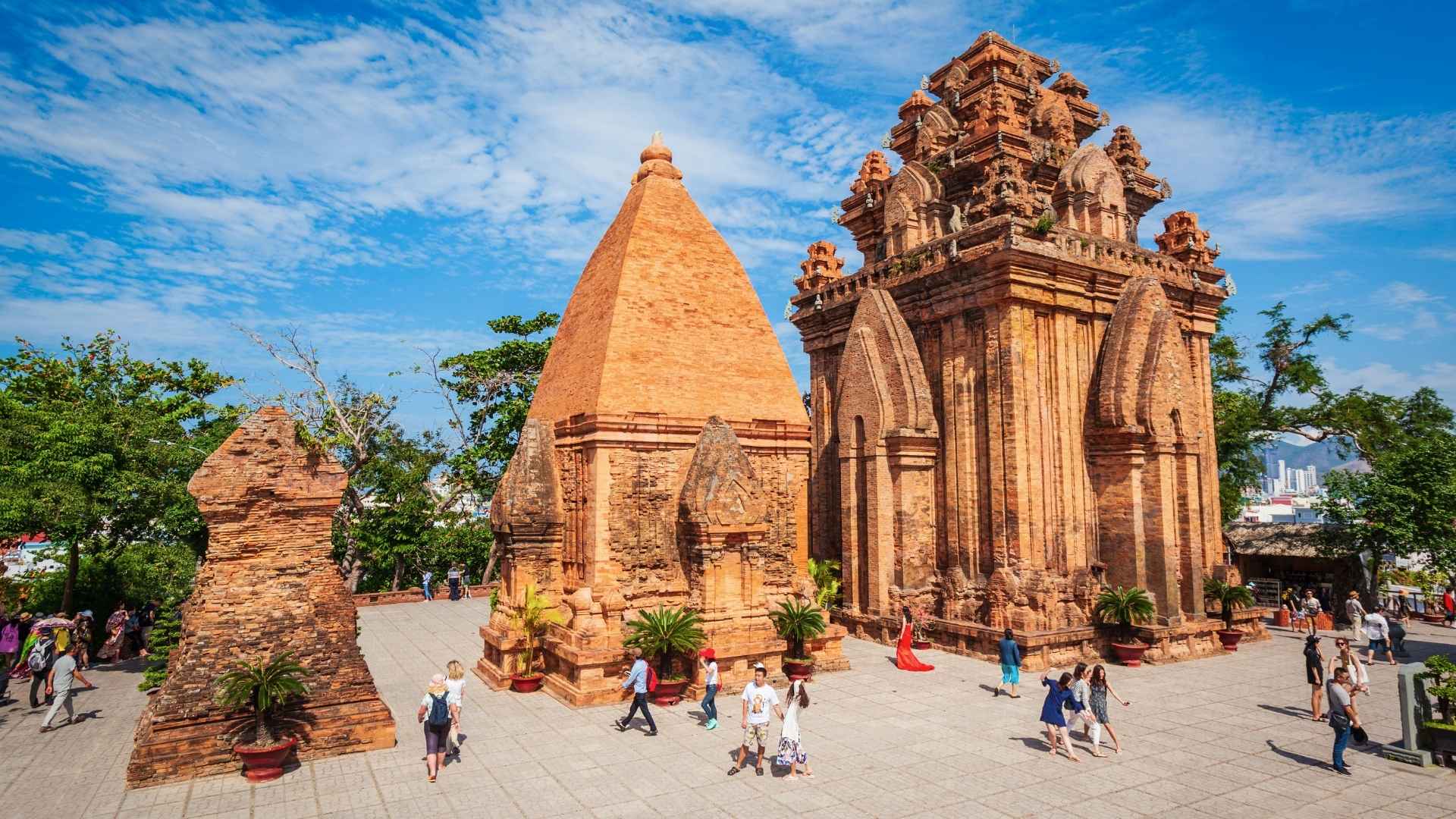
Allow the next 30–35 minutes for the upper terrace. Walk between the four surviving towers, look closely at the brick joints, rooflines and carved details, then enter the main sanctuary quietly to see the goddess image and observe the site’s continuing role in local worship.
Use the final 20–30 minutes to read the available historical displays and learn about the complex’s construction, restoration and Cham cultural heritage. Finish at the viewpoint overlooking the Cai River and Tran Phu Bridge before returning to the entrance.
The compact route is manageable within 60–90 minutes, although we recommend allowing extra time when ceremonies or traditional performances are taking place. Based on recurring visitor reviews, arriving early also gives you more space to appreciate the architecture before the upper terrace becomes busy.
>>> Continuing towards the coast after your cultural visit? Explore Nha Trang Beach for practical information about the city’s central shoreline.
Where to Stay Near Po Nagar Cham Towers
Staying along Tran Phu Street gives travellers practical access to Nha Trang’s beach, dining and cultural landmarks. It also makes it easier to place the temple complex within a broader itinerary rather than treating it as an isolated sightseeing stop.
Mercure Nha Trang Beach is a 4-star beachfront hotel with 108 locally inspired rooms at 88A Tran Phu Street, approximately 20 minutes by car from the towers. After a cultural morning, guests can return for sea-view accommodation, dining at Tathik Restaurant, drinks at Bay View Bar, treatments at Horizon Spa, an indoor pool and a 24-hour gym.
- Stay and Shine: A two-night stay with daily buffet breakfast, a 60-minute hair-wash treatment for two, plus early check-in and late check-out subject to availability; stay dates run until 28 August 2026.
- Stay Longer Save More: Extended stays receive increasing savings of up to 30%, giving travellers more time for the city’s beaches, food and cultural sites.
Book your stay at Mercure Nha Trang Beach and discover Nha Trang through the coastal rhythms, Champa influences and local stories that continue beyond the shoreline.
Frequently Asked Questions About Po Nagar
Is Po Nagar Still Used for Worship?
Yes. It remains an active place of worship where devotees pray and present incense offerings, particularly at the main sanctuary and during festival periods.
Visitors may enter designated areas, but religious practice takes priority. Keep voices low, avoid interrupting rituals and do not photograph worshippers without permission.
How Old Is the Complex?
Most surviving structures date from the eighth to the thirteenth centuries, although the site contains evidence of several phases of construction and repair. This means there is no single year that accurately describes every building.
How Many Towers Remain?
Four brick towers survive today. Sources disagree about the exact number that once stood here, so four is the most reliable figure to use for the present complex.
How Long Does a Visit Take?
Most visitors need 60–90 minutes for the principal route. Allow up to two hours for a slower visit that includes displays, performances, prayer or extended photography.
What Should Visitors Wear?
Wear clothing that covers shoulders and knees, especially inside the sanctuary buildings. A light cover-up is useful in Nha Trang’s warm climate and supports respectful entry.
When Is the Main Festival Held?
The main celebration runs for four days each year. Gregorian dates change annually, so check the confirmed programme for the year of your visit.